
 Affiliate Marketing Compliance
 Brand Protection
 Social Media Monitoring
 Sub-affiliate Transparency
 Marketing Intelligence
 PPC Monitoring


 by Brean Wilkinson | 29 Jun 2026
 5-min read
Generative AI has quickly become a vital tool for all sorts of content creation. Marketers are using AI to write reviews, create video content, and generate images. All too often, brands are unaware of how and where marketing partners are using AI.
However, things look set to change in Europe, with new legislation due on AI transparency. From the 2nd of August 2026, the EU Artificial Intelligence Act will introduce new transparency requirements that could change how AI-generated content is created, identified, and monitored on European-facing platforms.
While much of the discussion up to now has centred on the big AI companies, it is becoming clear that brands are becoming more of a focus point for legislators, particularly where third-party publishers, affiliates and influencers are creating content on their behalf.
The question isn't whether AI should be used to generate new content. It's about clarity for consumers about the information they are seeing and hearing and transparency on how much of it is created using AI.
For brands, getting on the front foot with this new legislation is essential. The consequences of not taking action could be harmful to them, even when the content is produced by someone else.
Here are 5 things brands need to know before the EU AI Act comes into effect in August 2026:
1. AI Transparency will become a marketing responsibility
There is a misunderstanding that the EU AI Act will apply only to suppliers of AI technology. This is misleading, as it will also apply to those using AI to generate content with commercial intent.
Where AI-generated or manipulated images, video or audio can be mistaken for genuine content, clear disclosure is expected to be required. The same will likely apply to written content, such as reviews, studies, and comments.
For brands working with affiliate publishers, influencer networks, individual creators, and media partners, there will likely be a need to identify where and when AI has been used, and to what extent.
AI transparency is moving from a ‘nice-to-have’ to a ‘compliance expectation’, and brands will have to keep pace with legislation if operating in the EU.

2. The EU AI Act will look to clamp down on manipulated content
The EU AI Act isn't just concerned about whether content is AI-generated. It's also concerned with reducing the risk of deception.
For brands, this raises important questions about partner-generated content for marketing purposes, including:
- AI-generated customer testimonials
- invented case studies
- fake "before and after" stories
- fabricated reviews
- artificial experts or influencers presented as real people
Where AI has been used to assist with content creation, brands remain responsible for protecting consumer trust and ensuring marketing claims are substantiated. The Act's transparency measures are intended to reduce deceptive and misleading content.
This is especially relevant for affiliate marketing, where large volumes of independently produced content can make manual oversight difficult.
3. Monitoring partners will become a necessity
Historically, when brands have focused on monitoring their marketing partners, the attention has mainly been on the following:
- trademark infringements and brand bidding
- failure to disclose affiliate relationships
- misleading pricing, rates, and discounts
- voucher and promo code abuse
However, AI introduces a whole new range of compliance matters that will need attention.
Brands may increasingly need to monitor publisher content for:
- failing to provide AI disclosures
- deepfake content
- synthetic videos
- cloned voiceovers
- manipulated product demos
- misleading AI-generated copy
For brands, this will likely mean that greater scrutiny of marketing partners is required before and during any business relationship. Specialist tools will likely be required to assist in monitoring vast quantities of content that may have been created using AI.
4. AI-generated content will need to be identifiable
Article 50 of the EU AI Act focuses on transparency regarding the use of AI-generated content. Disclosures are expected to become a necessary part of content marketing when using AI in production.
This could present significant issues for brands that work with hundreds, if not thousands, of partners. Trusting partners to have all their disclosures in place will be a near-impossible task to achieve manually.

5. Defensible processes may become your strongest compliance asset
The big shift the AI Act will introduce will be an emphasis on accountability.
If AI-generated content representing a brand is flagged for any reason, the associated brand will likely have to prove that reasonable governance processes have been put in place.
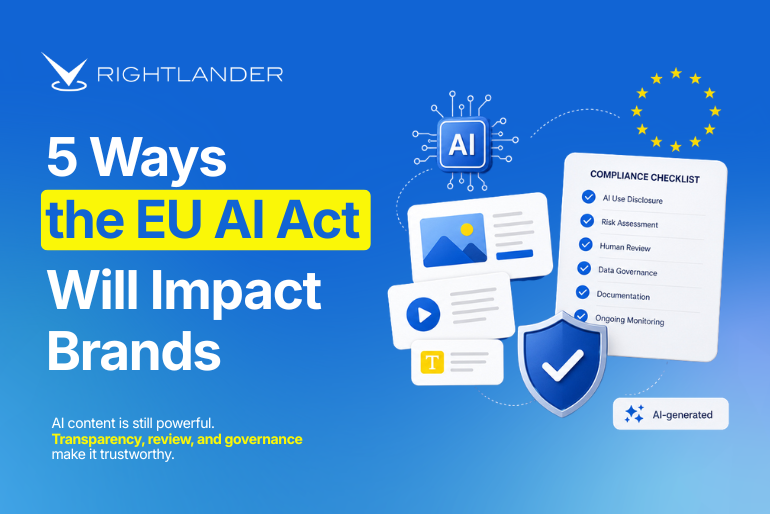
For brands managing affiliate and influencer programs, that could include:
- AI usage policies
- disclosure requirements
- AI monitoring systems
- audit trails of content reviews
This isn't simply a tick-box exercise of proving compliance. It's about demonstrating to regulators and authorities that your brand has taken reasonable steps to manage AI-related risks across its network.
What does the future hold for AI-generated marketing content?
The implementation of the EU AI Act this August doesn’t mean the end of AI-generated marketing content. It does, however, mark the beginning of a more transparent approach to how content is created, disclosed and overseen.
For brands that are using affiliates, influencers and publishers for marketing purposes, it is likely that processes will need to be put in place moving forward. Working closely with partners to ensure they understand their obligations when it comes to using AI-generated content is going to be essential.
For brands preparing for the EU AI Act's implementation, the focus should be on transparency. If brands can educate their marketing partners about their obligations under the EU AI Act, then the potential risks to brands can be significantly reduced.
Brands that invest in transparency now are likely to benefit most, not only for regulatory compliance but also for preventing reputational harm from misleading AI-generated content.
Is your publisher network ready for AI transparency?
If you are marketing products in Europe, then now is the time to review your monitoring processes, disclosure requirements and governance framework before the new obligations apply in August 2026.


