
 Affiliate Marketing Compliance
 Brand Protection
 Social Media Monitoring
 Sub-affiliate Transparency
 Marketing Intelligence
 PPC Monitoring


 by Brean Wilkinson | 22 Jul 2026
 3-min read
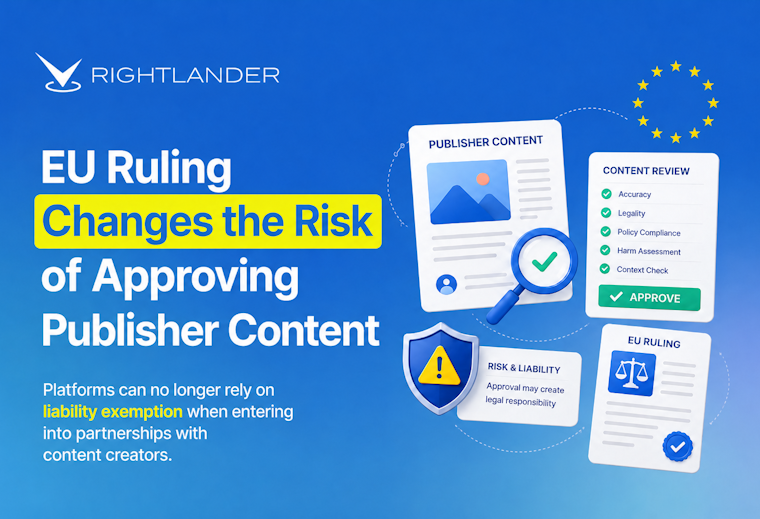
A European court case involving Google and an individual YouTube creator looks set to have far-reaching consequences for marketing partnerships between large platforms and the content creators that use them.
The ruling
Case C-421/24, AGCOM v Google Ireland, decided on 16 July 2026, found that Google had reviewed aspects of a YouTube creator’s channel before entering into a commercial agreement. This included popular videos, recent videos, and metadata of the specific YouTube creator.
The court held that this had given Google specific knowledge of the channel’s primary content, meaning it could not rely on the liability exemption. This is only available to platforms that are completely neutral hosting providers for any specific content.
Why this ruling matters
This ruling has challenged the long-held premise by many platforms that they are merely providing a place for users to find published content.
The judgement clearly asserts that reviewing content to assess a potential commercial partnership builds a greater understanding of that content. This, in turn, leads to greater responsibility for the platform provider.
For certain product verticals, this could create some significant challenges for marketing partnerships. In particular, financial and ecommerce sectors could be affected by this ruling.
Who could be affected?
Here are some of the organisations that may get caught up in the fallout from this case:
- Affiliate networks and influencer platforms
- Ecommerce marketplaces and retail brands
- Banks, lenders, insurers, investment firms and fintech companies
- Price-comparison and financial lead-generation platforms
- Creator and publisher monetisation programmes
- Publishers operating sub-affiliate or contributor networks
- Agencies approving creators for paid or commission-based campaigns
Publishers will likely face greater scrutiny during onboarding and ongoing monitoring, as platforms seek to limit any potential liability on them.
Risks in Ecommerce
Although the ruling focuses on one particular creator, the decision in this case could affect a range of publishing situations, such as:
- Counterfeit, restricted or unsafe products
- False scarcity and countdown timers
- Misleading discounts or reference prices
- Unsupported health, environmental or performance claims
- Hidden advertising and unclear affiliate disclosures
- Creators continuing to promote products after they have been recalled or withdrawn
Risks in Finance
The finance sector could be the vertical most affected by the court's decision, as much of the information provided by creators is governed by strict regulatory legislation. The following is likely to attract much greater attention:
- Misleading interest rates, returns or savings claims
- Important fees and conditions being omitted
- Inadequate investment or credit risk warnings
- Promotions for unauthorised or unsuitable services
- Influencers presenting personal opinions as financial advice
- Out-of-date rates, offers or product information
- Affiliate disclosures that are unclear or hidden to identify
What happens next?
It is important to understand that this court ruling is not new legislation around publisher marketing. It is a court ruling interpreting the hosting exemption under the EU Ecommerce Directive in a particular platform and revenue-sharing arrangement.
The wider application to retailers, financial brands and affiliate networks will depend on their role, knowledge, control, and contractual arrangements. The Digital Services Act now incorporates the EU’s intermediary-liability framework, making the ruling particularly relevant to current platform compliance, but it does not establish automatic co-liability in every affiliate relationship.
Now is the time for publishers to consider their content offering and whether any parts of it may cross lines or create friction with the platforms they use. This ruling goes beyond YouTube and TikTok and could lead to dramatic changes in how partnerships are formed and managed in the future.


